

1. Introduction: Why Parents Worry About Milk Teeth
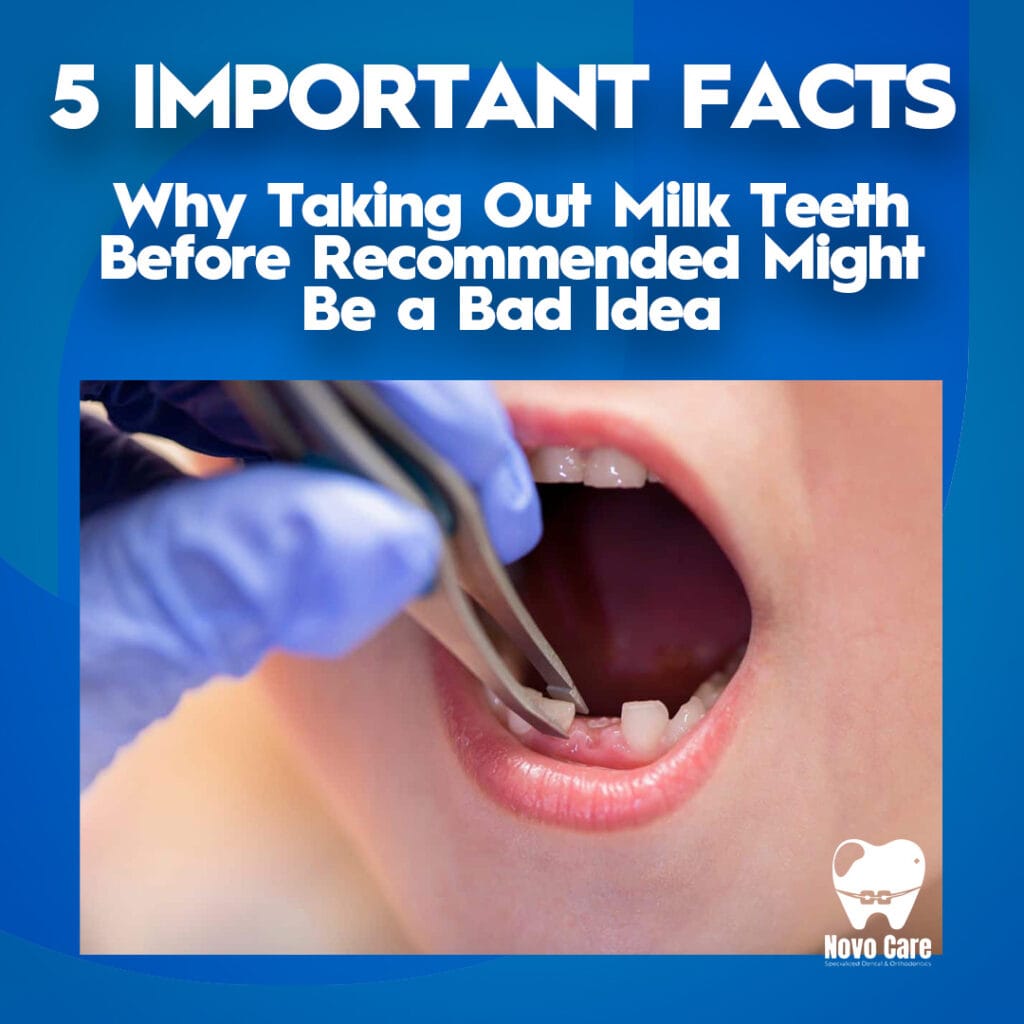
Taking out milk teeth before recommended really a good idea? Many parents feel tempted to “help” their child’s loose tooth come out faster—especially when it wiggles or causes discomfort. But dental experts caution that pulling a milk tooth too soon can lead to more harm than good.
Milk teeth, also known as baby teeth, play a vital role in guiding permanent teeth into position. Removing them before their natural time can interfere with speech, chewing, and even your child’s facial development.
2. What Are Milk Teeth and Why They Matter
Every child is born with a set of 20 milk teeth, which usually start appearing around 6 months and begin falling out naturally between ages 6 and 12.
These small teeth might look temporary, but they have big responsibilities:
- They help your child chew and speak clearly.
- They hold space for the permanent teeth waiting underneath.
- They shape your child’s smile and jawline as they grow.
If taking out milk teeth before recommended happens too early, those functions can be disrupted—leading to potential alignment and spacing problems later on.
3. 5 Reasons Not to Take Out Milk Teeth Before Recommended
Let’s break down the five important facts every parent should know:
1. Risk of Infection
Pulling out a tooth too early can expose the gum to bacteria. This increases the risk of infection and can cause pain, swelling, or bleeding.
2. Misalignment of Permanent Teeth
Milk teeth act as placeholders. When one is removed too soon, permanent teeth may drift or erupt incorrectly—resulting in crooked teeth that might need orthodontic correction later.
3. Speech Development Issues
Your child’s ability to pronounce certain sounds depends on tooth placement. Taking out milk teeth before recommended can cause speech delays or lisps during critical language development years.
4. Gum and Bone Problems
The gum beneath a milk tooth may not be ready to support permanent teeth. Removing it early can lead to weakened bone growth or gum recession.
5. Emotional and Physical Discomfort
Children often associate forced tooth removal with pain and fear. Letting teeth fall out naturally reduces anxiety and teaches patience.
4. When Is the Right Time to Remove Them?
According to pediatric dentists (see American Academy of Pediatric Dentistry and NHS guidelines), the right time to remove a milk tooth is only when it’s extremely loose and falls out with minimal effort.
If the tooth is only slightly wobbly or causes mild discomfort, it’s best to wait. Nature has its timeline—and most teeth will fall out painlessly on their own.
Tip: Encourage gentle wiggling with a clean finger or tongue, not forceful pulling.
5. How to Care for Loose Milk Teeth Naturally
Instead of taking out milk teeth before recommended, try these safe, dentist-approved methods:
- Keep the area clean by brushing gently around the loose tooth.
- Offer soft foods if the area feels sensitive.
- Rinse with saltwater to prevent infection.
- Visit a pediatric dentist if the tooth seems stuck, painful, or discolored.
You can also check out our related post:
“How to Handle Wiggly Teeth in Kids Without Pain”
6. Conclusion: Let Nature Take Its Course
In short, taking out milk teeth before recommended can cause more problems than it solves. These early teeth are essential guides for your child’s dental development, and rushing the process may lead to infection, speech issues, or future orthodontic needs.
Always remember: when in doubt, consult your dentist rather than take matters into your own hands. Patience today will save your child from painful treatments tomorrow—and ensure a healthy, confident smile for years to come.